Chronicle
AI-native presentations
Chronicle is an AI-native tool that turns your notes and business context into compelling narratives and a presentation worth giving. People use it when the stakes are high. Raising a round. Nailing an interview. Getting buy-in on an idea.
AI made decks faster to create. But they lack opinion and identity. You get something plausible, but forgettable. Yet, every time someone makes a presentation, they are putting their credibility on the line.
I helped launch Chronicle to market with a small remote team. I designed features across the entire product, and shipped a few singlehandedly as well. Agentic experiences, design tools for a freeform canvas, onboarding flows, improving navigation, or adding sharing and exporting functionality.
That's too many things to put into a single case study. The following are a few highlights, alongside the product vision and thesis that I helped craft alongside the founders.
Credible decks at the speed of AI
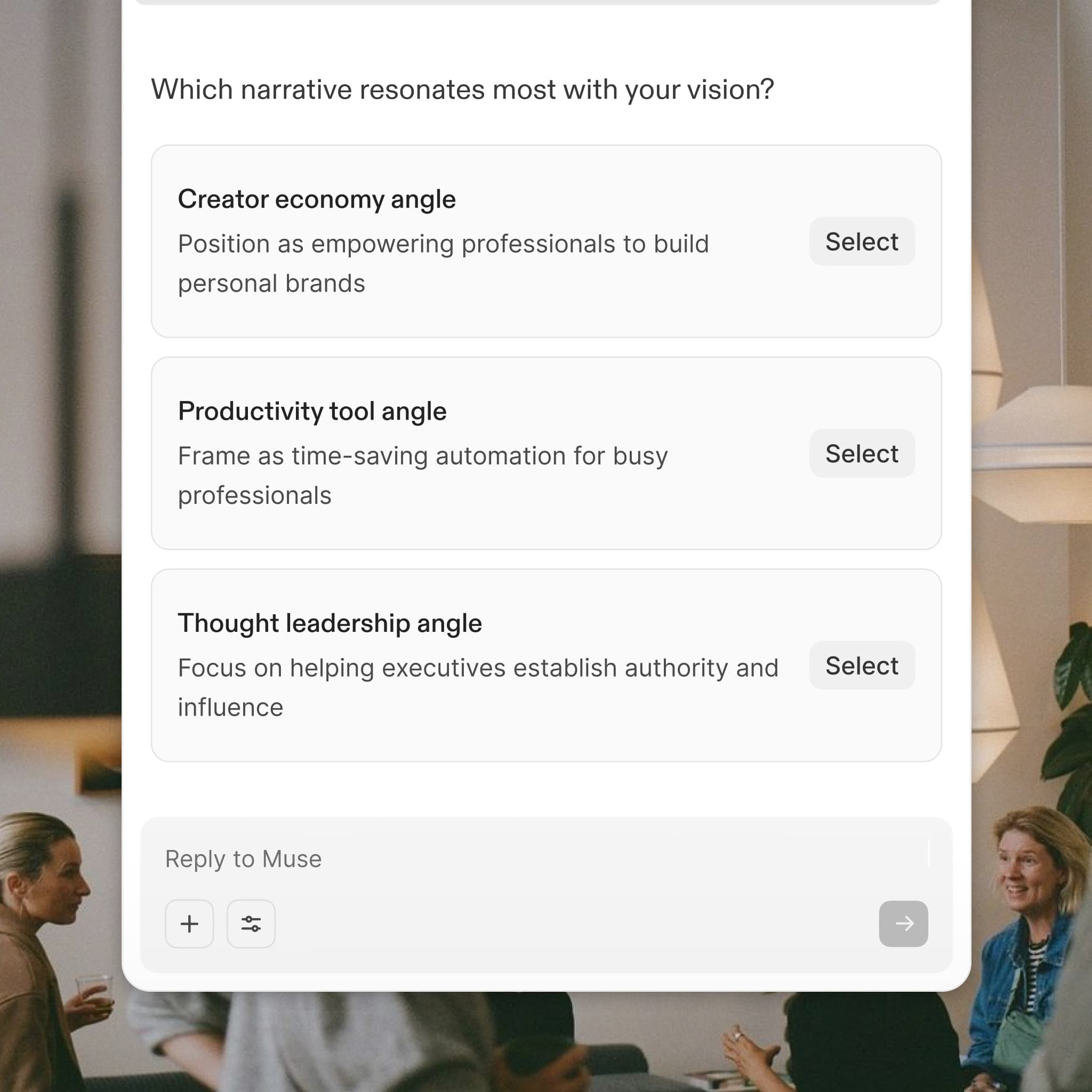
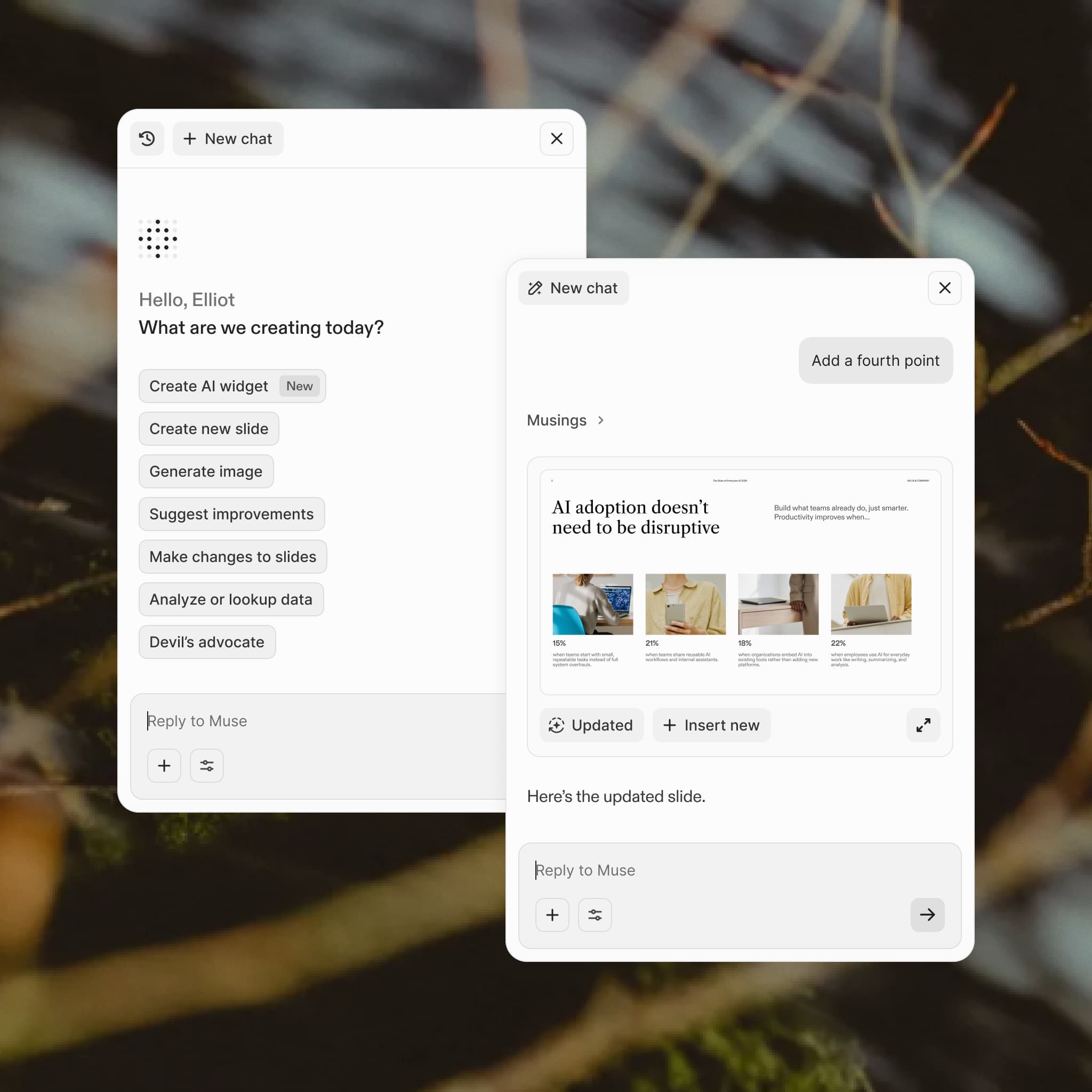
Bring rough notes, a half-formed argument, or a blank page. AI helps shape the narrative, and generate a deck that feels ‘edit-worthy’. My focus was on making the AI generated outputs feel good enough that someone would want to invest in refining the last 10% themselves before sharing.
I designed the visual identity for the agent, calling it ‘Muse’, based on how our team would often share ideas with each other, calling them ‘musings’. I also wrote the system prompt, skills and tool calls that Muse uses to write copy, generate visuals and design layouts.
I worked backwards, starting by defining the characteristics of world-class decks. Then wrote evals that could test that the narrative of a deck flowed well, and that visuals were consistent and on brand.
Tasteful defaults
Every decision the product makes on your behalf is a decision you don't have to. The time you spend creating a presentation should be on the message. Not learning layout design, typographic systems, color theory, or choosing the perfect visual.
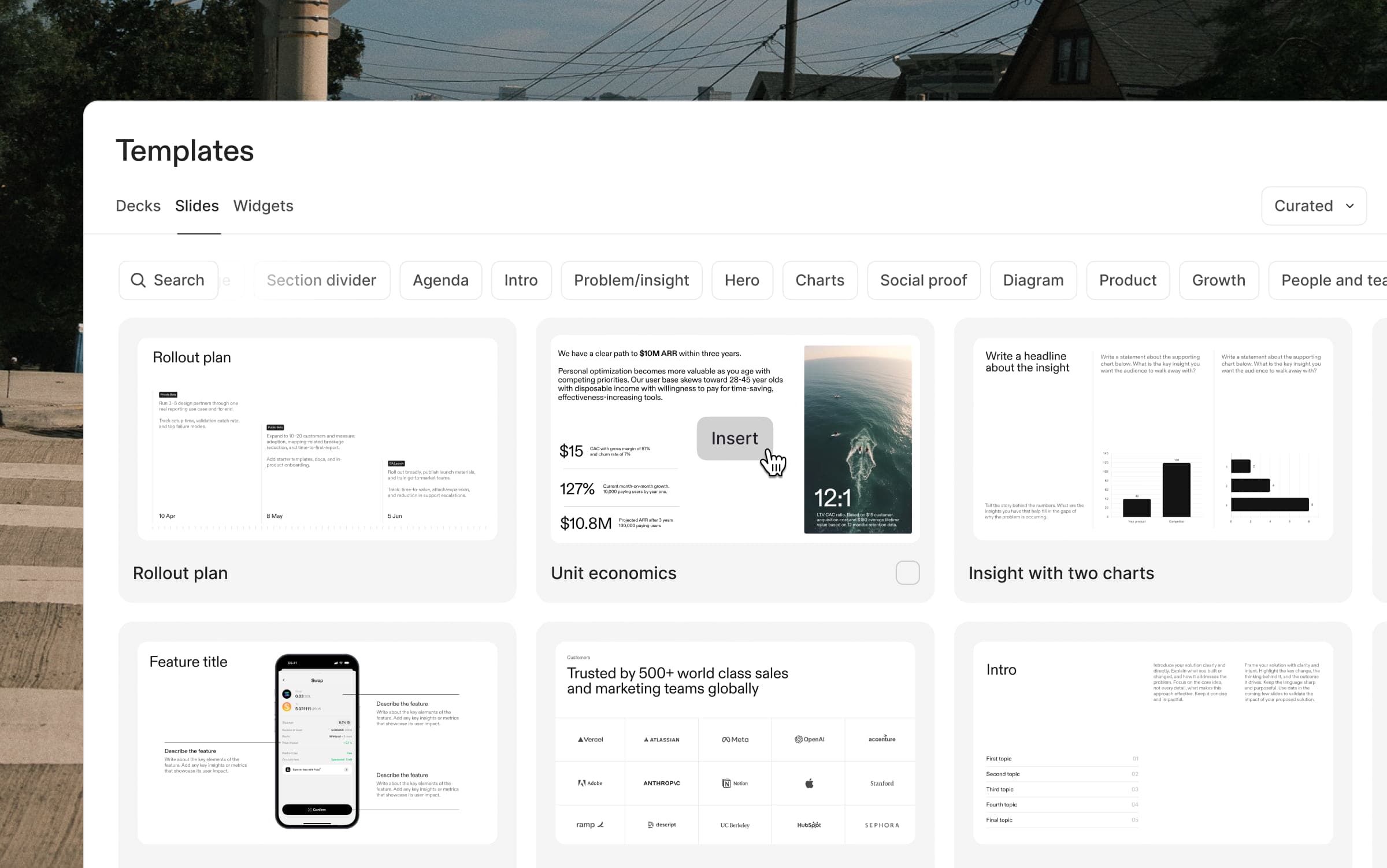
I baked taste into AI outputs by designing a suite of deck templates, 200+ individual slide layouts, and widget presets, that users could also insert themselves. On insert, fonts, colors and styles would automatically switch to match their deck's theme.
Doubling WAUs overnight by designing with code
As my confidence navigating the codebase grew, I started to ship features or improvements independently (like this drag'n'drop slide sorter above).
I paired with engineers to understand our architecture and engineering principles. It was important that I wasn't treated differently as a designer, and that my work could stand up in a PR.
After I designed and shipped an end to end redesign of the onboarding flow (all by myself!), weekly new users doubled, and continued to stay at a higher rate than before.
#4 Product of the Year 2025
We had 20x growth in the first 6 months post-launch, and WAUs grew 72% following Muse launch. Chronicle is used by 5000+ teams, including people at Notion, Ramp, Meta, OpenAI, Stanford, Figma, Apple, and Vercel.
People have shared with us that Chronicle helped them save time, land clients, even get jobs. They've presented Chronicle decks on big stages.
Building Chronicle wasn't easy, or linear. It took five years and four rebuilds. We held the bar high for ourselves long before anyone else was holding us to it.